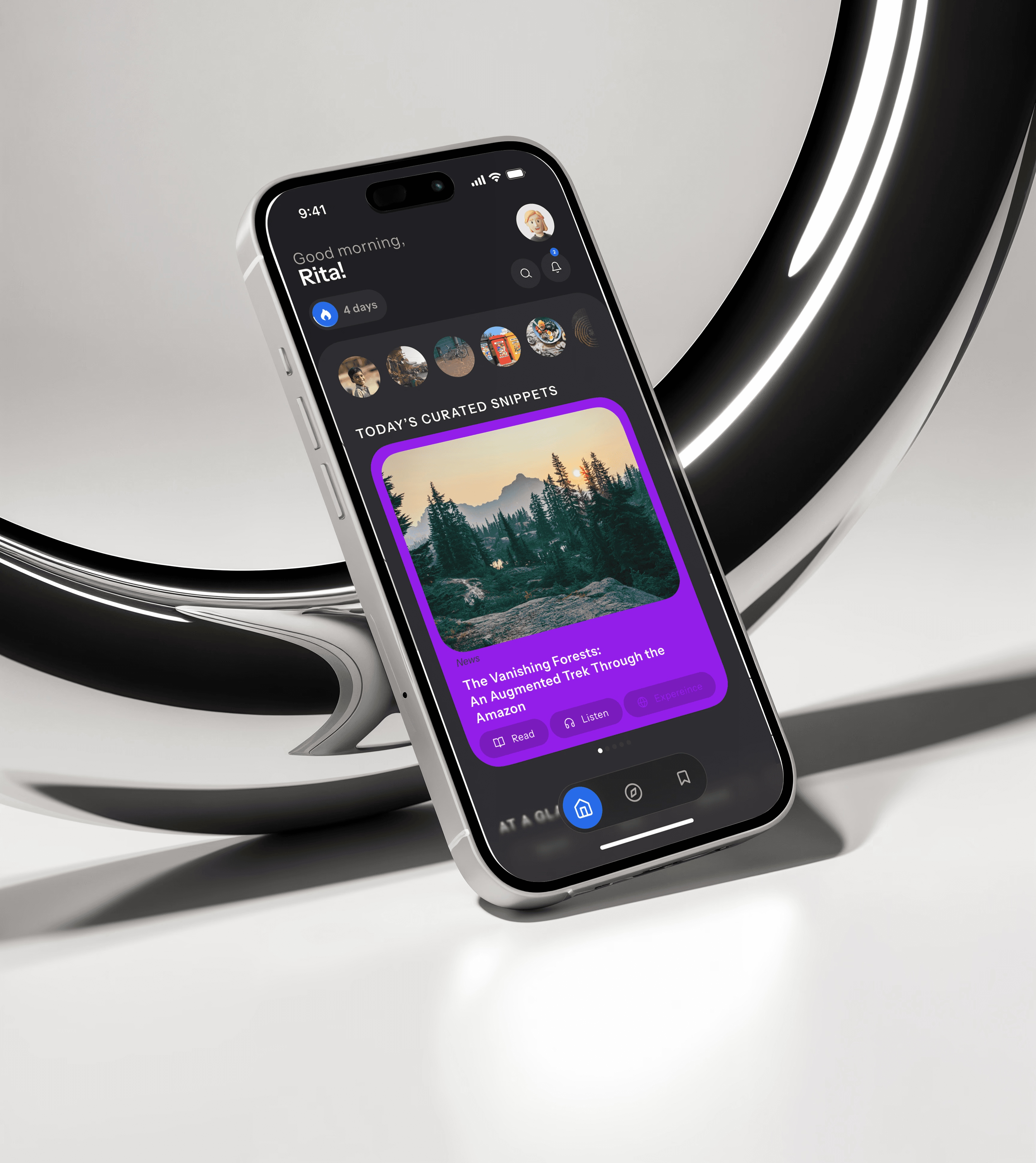
Redefining News: Personalized, Context - Aware, Engaging

Redefining News: Personalized, Context - Aware, Engaging

We've all been there - scrolling through endless headlines at 2 AM, watching world-changing events feel... flat. Important stories buried under clickbait, complex issues reduced to soundbites.

We've all been there - scrolling through endless headlines at 2 AM, watching world-changing events feel... flat. Important stories buried under clickbait, complex issues reduced to soundbites.

Domain

Product Design. UI Design

Product Design. UI Design

Timeline

1 month, Semester II

1 month, Semester II

Team

Individual

Individual

✨The Spark

✨The Spark

A late-night scroll, another forgettable article, and a single thought:

“Why is the most important stuff in the world... so boring to read?”

A late-night scroll, another forgettable article, and a single thought:

“Why is the most important stuff in the world... so boring to read?”

Problem

Problem

News apps force users to scan static headlines juggling between fragmented platforms, with no adaptation for different contexts or engagement levels.

Solution

Solution

I redesigned news as an adaptive AI experience that learns preferences and adjusts to context, making consumption social and genuinely engaging.


Stack

Stack

Stack

Why we need to rethink news?

Why we need to rethink news?

Insights from Research - Reports. Interviews(10). Survey(30)

Insights from Research - Reports. Interviews(10). Survey(30)

Only 5%

Only 5%

📉 Indian users have paid for online news in the year 2023, indicating that news is not perceived as valuable or engaging enough to warrant payment [1]

📉 Indian users have paid for online news in the year 2023, indicating that news is not perceived as valuable or engaging enough to warrant payment [1]

39%

39%

⚠️ News avoidance is rising: Indians avoid news due to boredom and negativity-up 3 percentage points year-on-year [2]

⚠️ News avoidance is rising: Indians avoid news due to boredom and negativity-up 3 percentage points year-on-year [2]

Only 10%

Only 10%

of the digital news market is dominated by news apps - showing poor adoption rates

of the digital news market is dominated by news apps - showing poor adoption rates

Mapping pain points

Mapping pain points

Persona

Persona

Aarav, 27

Digital Marketing Associate

Delhi

“I don’t get a lot of time to read news. I mostly scan through Inshorts and keep up with social media news bits.”

ABOUT:

  • Busy on-the-go individual

  • tech savvy

  • apps he uses

Tech comfort level: High


Early adopter of new technology (owns an AR-capable smartphone and uses wearables)

News Consumption Habits:

  • Frequently skims headlines during work breaks

  • Listens to news while commuting

  • Engages deeply with a few selected stories when free in the evening

  • Often shares or discusses news in group chats and social media

GOALS:

  • Wants the news to align with his interests without overwhelming her with irrelevant topics.

  • To have news accessible to him all the time

  • Needs the flexibility to switch between reading, listening, and interacting

Goals:

  • Wants the news to align with his interests without overwhelming her with irrelevant topics.

  • To have news accessible to him all the time

  • Needs the flexibility to switch between reading, listening, and interacting

FRUSTRATIONS:

  • Bored of reading lengthy articles

  • Feeling overwhelmed with the doom scroll & sheer volume of news available

  • Frustrated by clickbait summaries lacking depth and fragmented sources.

Frustrations:

  • Bored of reading lengthy articles

  • Feeling overwhelmed with the doom scroll & sheer volume of news available

  • Frustrated by clickbait and shallow summaries lacking depth or meaningful context.

Empathy Mapping

Empathy Mapping

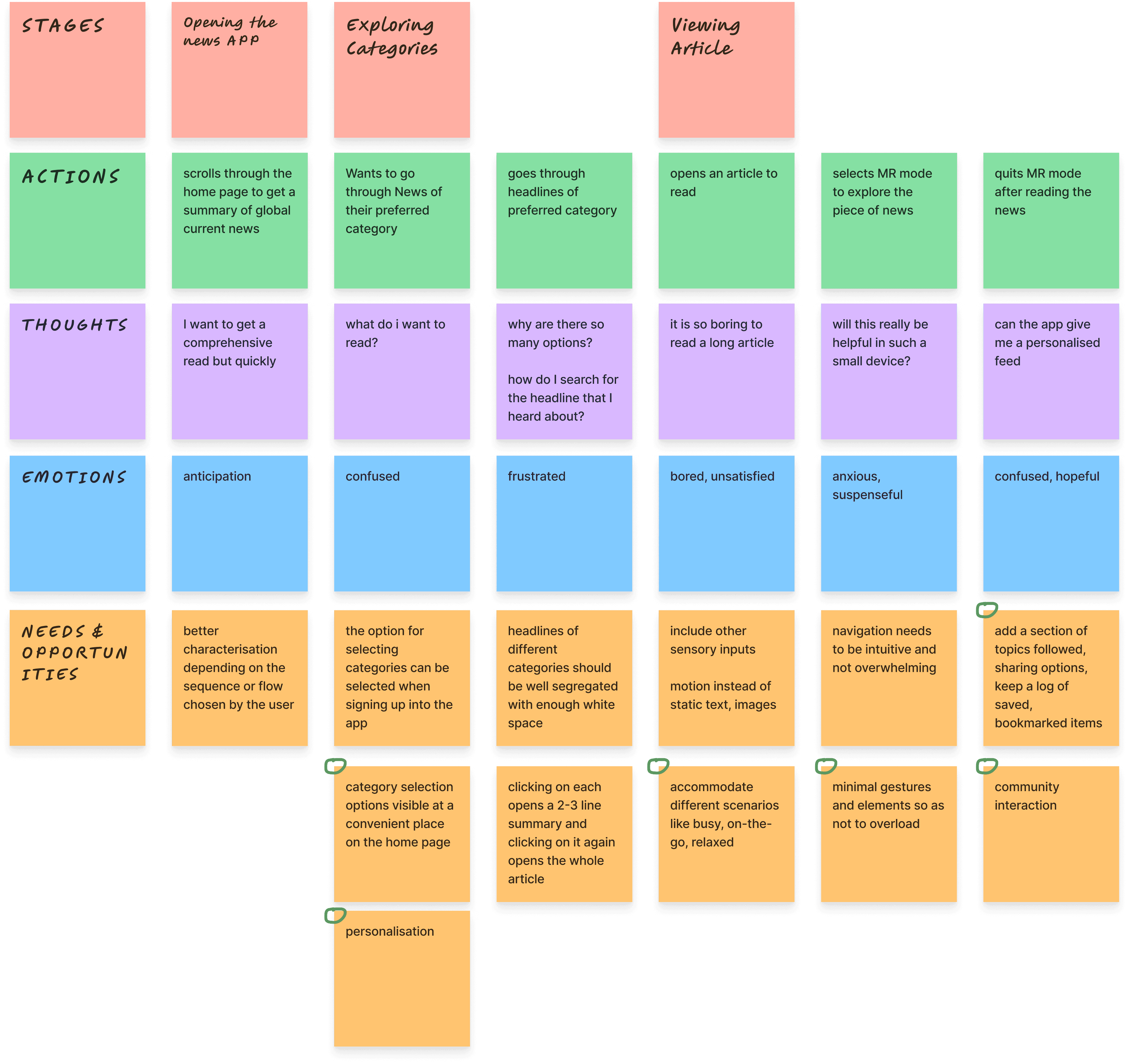
Journey Mapping

Journey Mapping

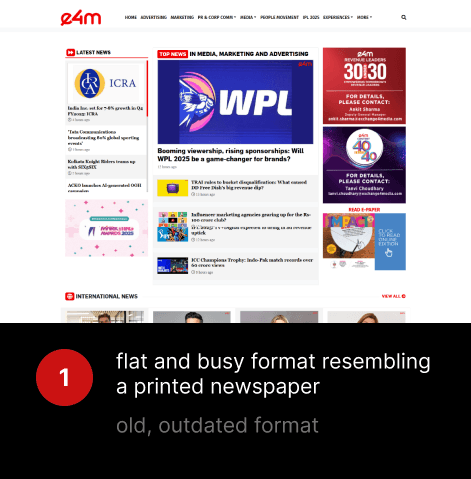
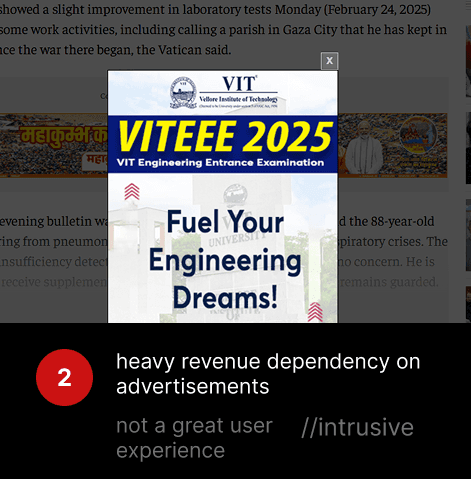
Competitor Analysis

Competitor Analysis

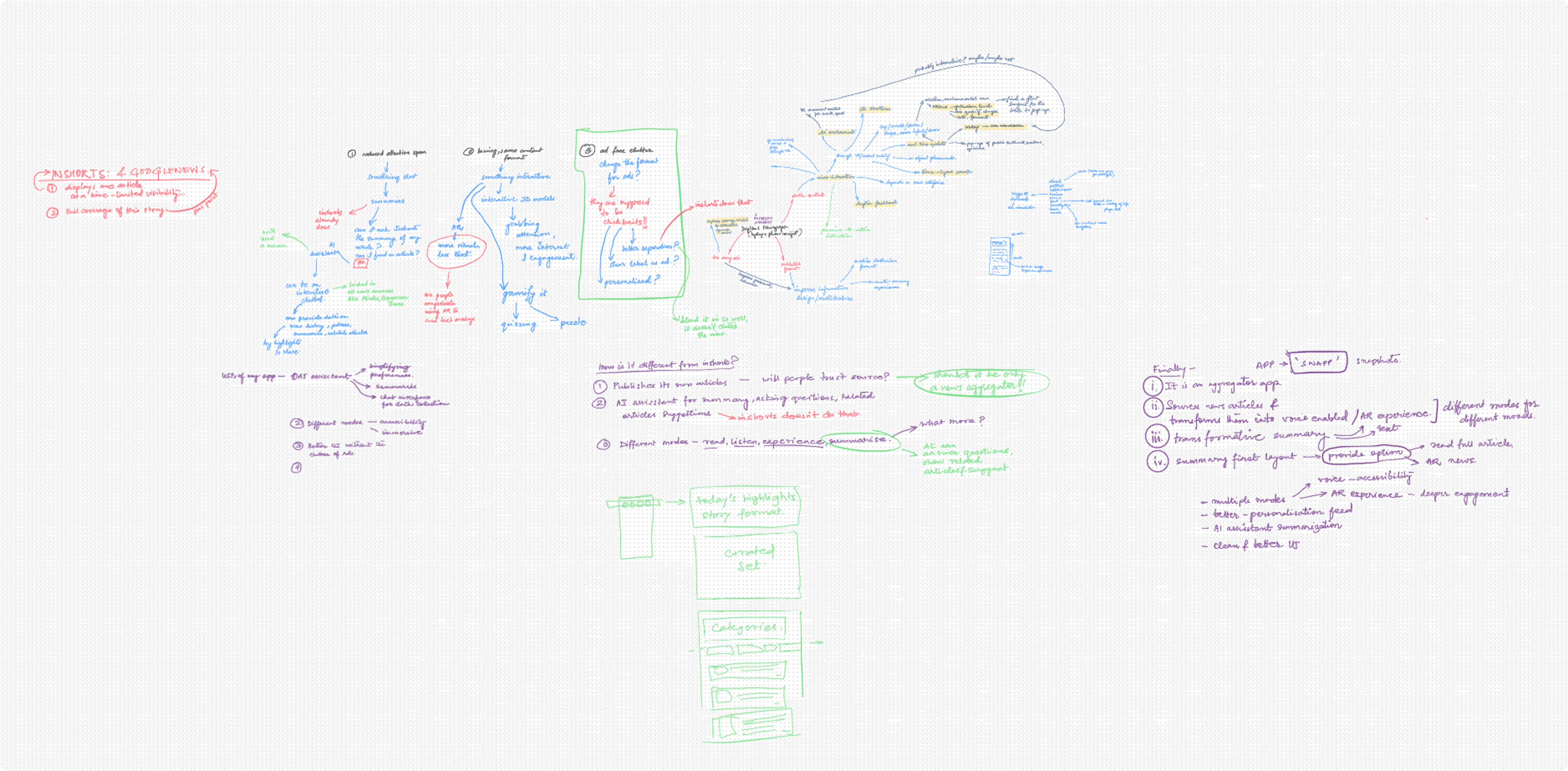
Started with scribbling some ideas…

Started with scribbling some ideas…

Wireframing

Wireframing

✔️ Early Exploration

I was captivated by AR+VR's immersive potential and started wireframing cinematic living-room experiences.

❌ The "Living Room Newsroom" Fixation

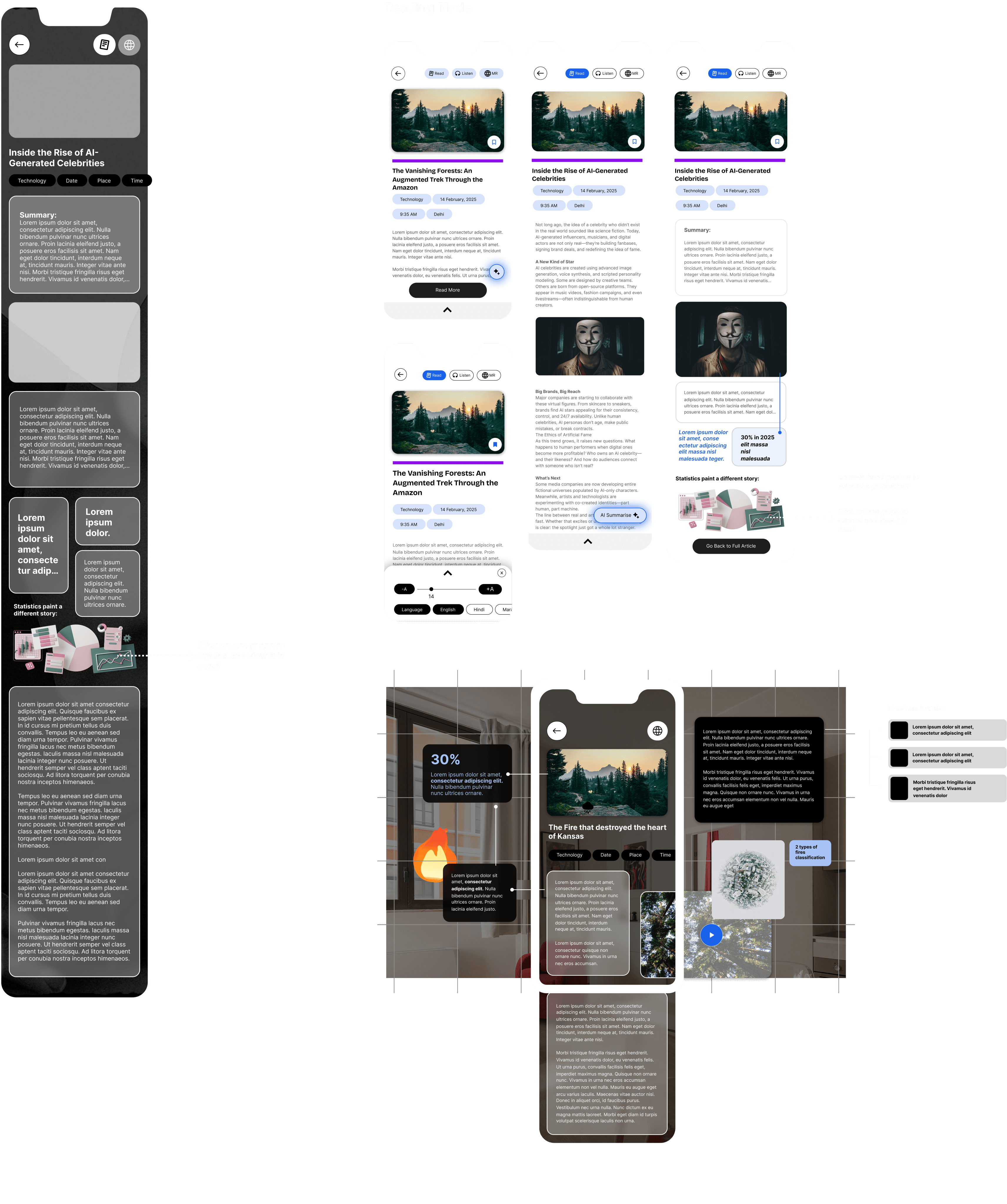
My earliest prototype imagined users in their living room with news stories unfolding across their coffee table in 3D - interactive timelines, character avatars, satellite maps, the whole cinematic treatment.

It worked. For that moment. But only for that moment.

⭐ Wins

  • AR overlays with live data

  • Gesture-based navigation (tap, pinch, zoom)

  • Smart feed filtering out the noise

❌ Fumbles

  • Users weren’t always looking to immerse themselves in news
What was going wrong

What was going wrong

I was so taken by the immersive power of AR/VR that I began crafting the solution around it right from the start.

🎭 The "Living Room Newsroom" - My First Fixation

One of my earliest prototypes imagined users sitting in their living room, with a news story unfolding across their coffee table in rich 3D. Interactive timelines, character avatars, satellite maps - the whole cinematic treatment.
It worked.

For that moment.

But only for that moment.

🧭 The Turning Point: Designing for Context, Not Just Tech

This was the moment I returned to my user interviews. I reread quotes that were never about tech - they were about feelings and friction:

  • "I forget articles I save for later."

  • "Sometimes I just want the highlights while walking."

  • "Can I listen instead of read?"

Here’s where things got interesting…

Here’s where things got interesting…

🧠The Ideation

What if the news knew what I needed - before I did?

Can we let users deep-dive into a story - without locking them into a rigid mode?

Could the app surface just enough - a timeline, key points, a visual clue - to the story in under a minute?

What if AI could gather personalised headlines?

"How might we create a news experience that instantly delivers just enough personalised insight and context, without imposing rigid or complex modes of interaction?"

"How might we create a news experience that instantly delivers just enough personalised insight and context, without imposing rigid or complex modes of interaction?"

The Final Solution - Not Just News, An Experience

The Final Solution - Not Just News, An Experience

🎛 A context-aware news companion. It adjusts to your needs, your time, your mode - not the other way around.

Mapped emotional states to content types

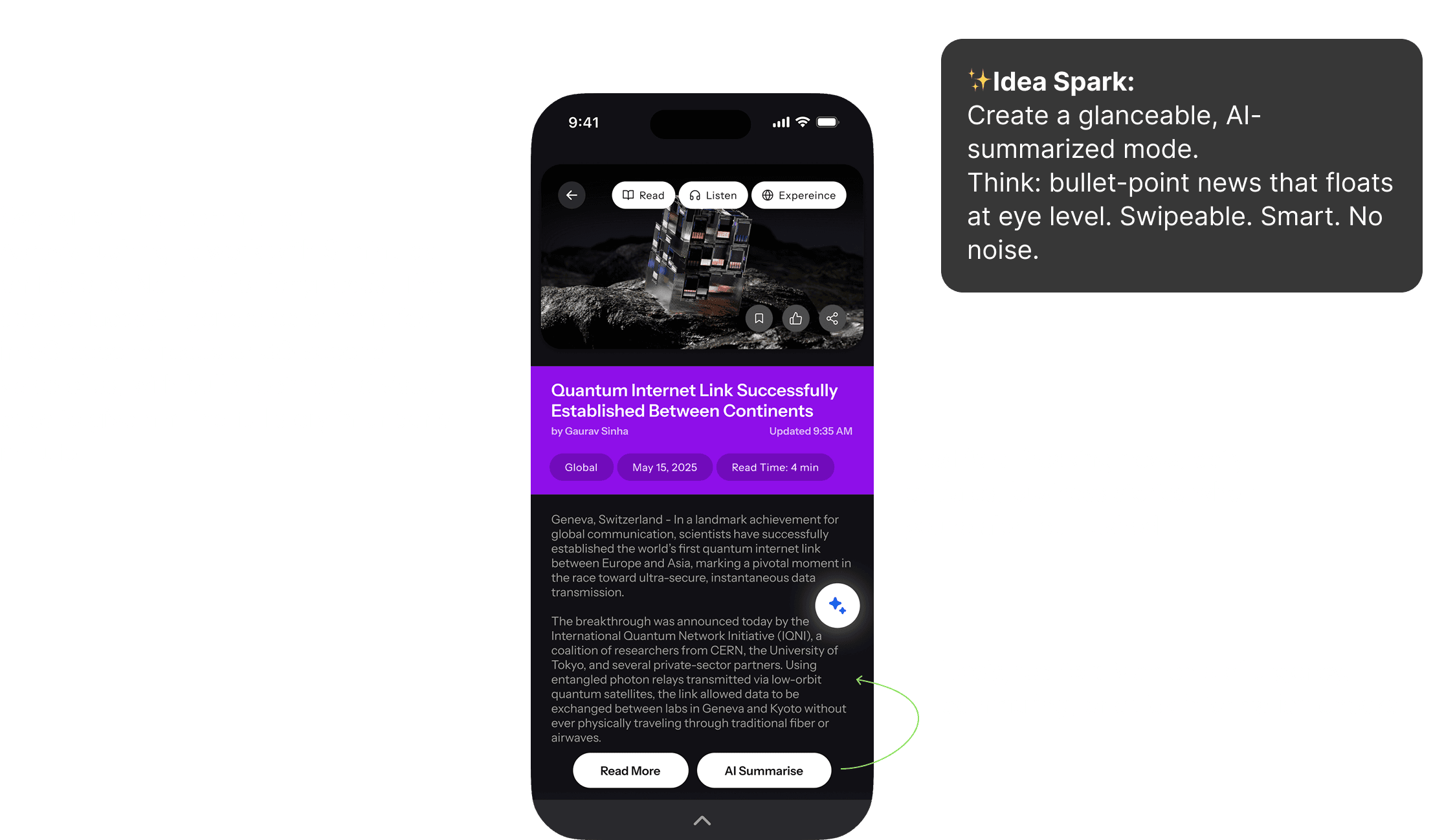
Eventually, the ideation narrowed into three core experience pillars, derived from user context:
1.

1.

2.

2.

3.

3.

How the final system works together

How the final system works together

At its heart, the app is a shape-shifting canvas for news:

At its heart, the app is a shape-shifting canvas for news:

The result is not just a product - it’s an adaptive relationship with news.

The result is not just a product - it’s an adaptive relationship with news.

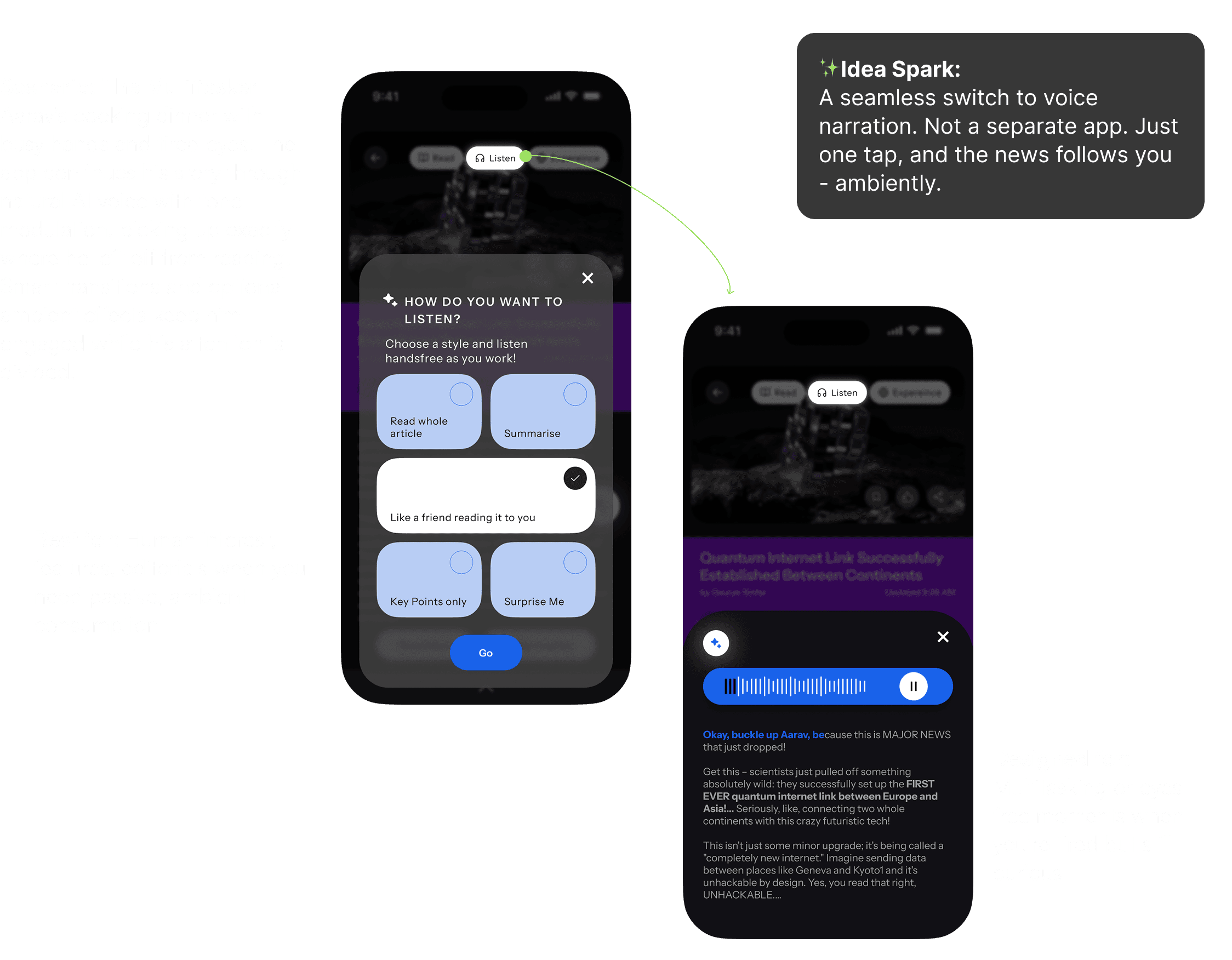
Wake up groggy? Get a voice-led recap while brushing.

Free at lunch? Glance through summarized smart headlines.

Free at lunch? Glance through summarized smart headlines.

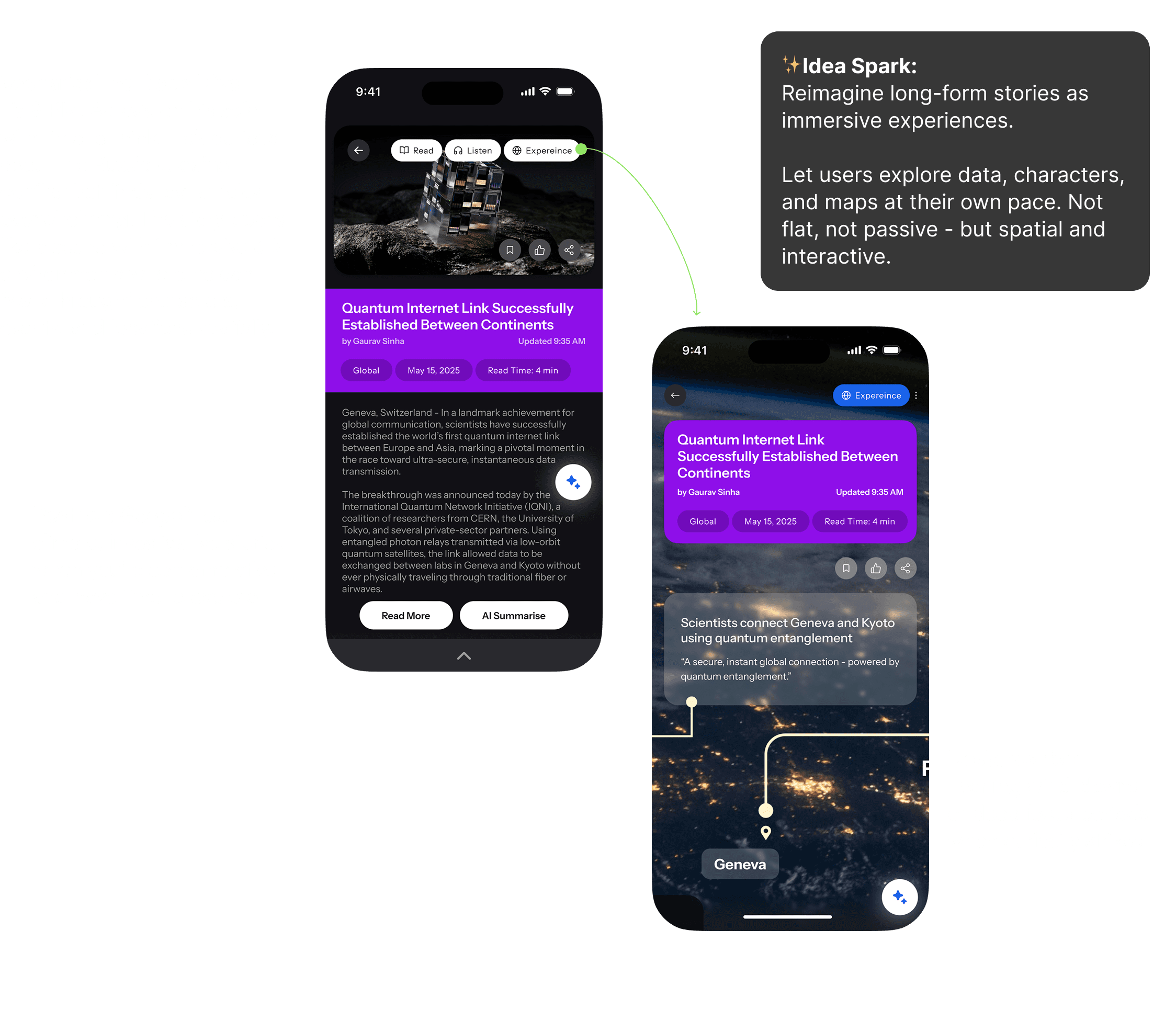
Curious at night? Step into an interactive AR/VR explainer.

Curious at night? Step into an interactive AR/VR explainer.

Burned out mid-week? Let it surface calming, constructive stories.

Burned out mid-week? Let it surface calming, constructive stories.

News becomes social, smart, and a little addictive.
Meanwhile, the AI learns preferences and patterns to personalise news for the user

News becomes social, smart, and a little addictive.
Meanwhile, the AI learns preferences and patterns to personalise news for the user

Information Architecture

Keeping curiosity alive

Revenue streams for the business?

Ethical data collection and its monetisation

Run advertisements

Maintain subscription paywalls for some features

Business Model Canvas

SWOT analysis

Create a free website with Framer, the website builder loved by startups, designers and agencies.